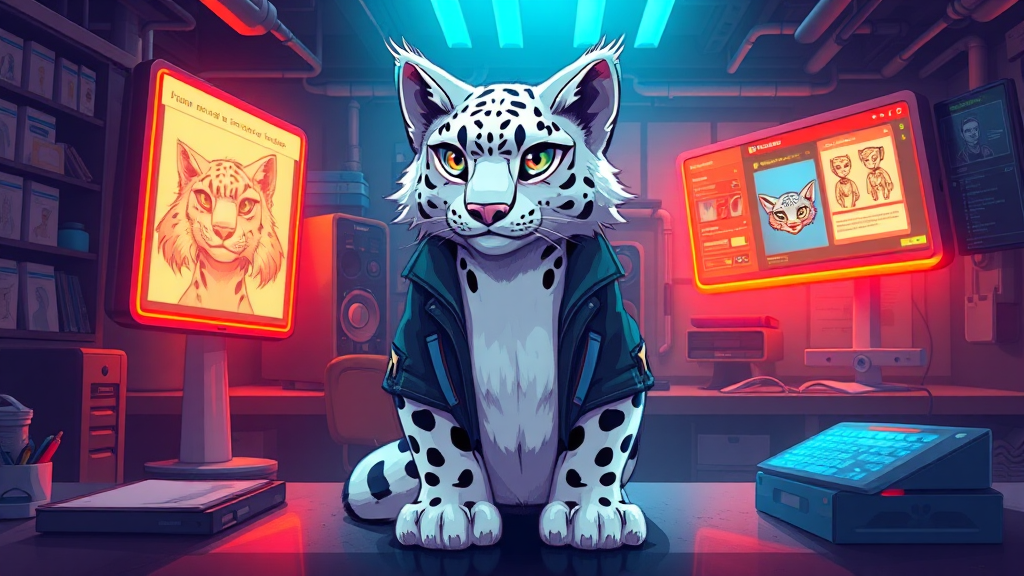
https://crushon.ai/trends/furry: How AI Is Reshaping Furry Character Creation and Fandom Storytelling
The furry fandom has always been a creative powerhouse. Long before generative models became mainstream, artists, writers, and roleplayers were building elaborate characters, personal mythologies, and entire worlds around anthropomorphic identities. What is changing now is not the impulse to create, but the speed, accessibility, and intimacy of the tools available. The page at https://crushon.ai/trends/furry sits right at the intersection of that shift, illustrating how an AI companion platform is responding to one of the most consistently engaged communities in online fandom.
This article explores what the furry trend means in the context of AI character platforms, why it matters for creators and fans, and how anyone curious about the space can approach it thoughtfully. We will look at character design, storytelling, community norms, ethical questions, and practical ways to get better results from AI-driven furry interactions.
Why the Furry Fandom Was Always a Natural Fit for AI
Furry culture is built on customization. A fursona is not just a picture; it is a persona with a species, a personality, a backstory, sometimes a whole belief system. That level of detail is exactly the kind of input that large language models and character-driven AI systems thrive on. When a user describes a snow leopard mechanic with a dry sense of humor and a fear of deep water, they are giving the model rich, structured material to work with.
There is also a long tradition of collaborative storytelling in the fandom. Forums, chat rooms, conventions, and art-sharing sites have hosted decades of shared narratives. AI companions extend that tradition by making a responsive partner available at any hour, one that can remember context, adapt tone, and stay in character across long conversations. The trend page reflects this demand rather than inventing it.
Another factor is visual identity. Furry characters are highly visual, and AI image tools have become remarkably good at generating anthropomorphic designs. When text-based character AI and image generation are combined, users can move from a written description to a consistent visual reference in minutes. That loop between language and image is a major reason the furry niche has become one of the most active categories on AI companion platforms.
What the Trend Page Actually Signals About User Behavior
Trend pages on AI platforms are useful because they show where real attention is going, not just where marketing budgets are pointed. A furry trend page indicates sustained, repeat engagement. Users are not simply trying a novelty once; they are returning to refine characters, continue storylines, and explore new scenarios.
Several behavioral patterns tend to show up in this kind of niche:
- Deep personalization: Users invest time in defining species, pronouns, personality traits, speech patterns, and boundaries.
- Long-form roleplay: Sessions are often narrative rather than transactional, with users building multi-chapter arcs.
- Character consistency: Fans care about whether a character stays recognizable across conversations and updates.
- Community sharing: Character concepts, prompts, and artwork circulate through social channels and fandom spaces.
- Emotional attachment: Many users treat their AI companions as creative partners rather than disposable tools.
Understanding these patterns helps explain why platforms invest in furry-specific features and why the trend is unlikely to fade quickly. It is not a passing meme; it is a durable use case with a passionate audience.
Designing a Furry Character That Works Well With AI
Getting a satisfying result from an AI companion depends heavily on how you set it up. Vague prompts produce vague characters. Specific, layered prompts produce characters that feel alive. Here is a practical framework for building a furry persona that holds up over time.
Start With Species and Physical Identity
Species choice carries cultural and aesthetic weight within the fandom. A wolf, a fox, a dragon, and a rabbit each come with different expectations. Decide whether you want to lean into those expectations or subvert them. Then add physical details that matter for storytelling: build, markings, clothing style, distinguishing features, and any accessories that signal role or history.
Define Personality in Layers
Instead of listing adjectives, describe behavior. “Protective but bad at expressing it” is more useful than “kind.” “Uses humor to deflect serious conversations” gives the model something to act on. Layers of contradiction make characters feel human, or at least believably anthropomorphic.
Give the Character a World
Backstory and setting matter. Where does the character live? What do they do for work? What are they afraid of? What do they want that they cannot easily get? A character with goals generates better scenes than a character who simply reacts.
Set Boundaries and Tone
Good character design includes limits. Decide what kinds of scenes you want, what tone you prefer, and what the character should never do. Clear boundaries reduce drift and keep long conversations coherent.
The Role of Memory and Consistency in Long-Form Roleplay
One of the biggest technical challenges in AI companionship is memory. A character that forgets a key detail from twenty messages ago breaks immersion. Platforms have responded with improved context handling, character memory features, and systems that summarize past interactions.
For users, the practical takeaway is to reinforce important details. Reintroduce names, relationships, and ongoing plot points naturally within the narrative. This is not a workaround so much as a collaboration technique. The more clearly you signal what matters, the more reliably the AI will carry it forward.
Consistency also applies to voice. If your character speaks in short, clipped sentences, keep modeling that. If they are poetic and verbose, demonstrate it. Models tend to mirror the register they are given, so your own writing style shapes the output significantly.
Creative Writing, Art, and the Blurred Line Between Fan and Author
The furry fandom has always blurred the line between consumer and creator. AI accelerates that blurring. A user who once commissioned art or wrote short stories can now generate reference images, draft dialogue, and iterate on plots in a single session.
This raises interesting questions about authorship. When a storyline emerges from a back-and-forth between a human and an AI, who owns it? Most communities are still working this out. The practical answer is that the human remains the director: they set the premise, make the choices, and decide what is worth keeping. The AI is a collaborator, not an author in the traditional sense.
For artists, AI can be a brainstorming tool rather than a replacement. Generating quick visual concepts can help clarify a design before committing to a final piece. Many artists in the fandom use AI this way, treating it as a sketchpad rather than a finished product.
Community Norms, Ethics, and Responsible Use
Any technology that touches identity and intimacy deserves careful handling. The furry community has strong norms around consent, credit, and respect for creators. AI platforms operating in this space should be evaluated on how well they support those norms.
Several ethical considerations are worth keeping in mind:
- Consent and boundaries: Users should be able to define and enforce limits in interactions.
- Attribution: AI-generated work inspired by a specific artist’s style should not be presented as that artist’s work.
- Privacy: Personal details shared in roleplay should be handled responsibly by the platform.
- Age appropriateness: Platforms should have clear policies and safeguards for adult content.
- Emotional well-being: Users should be encouraged to maintain real-world connections alongside AI companionship.
These are not abstract concerns. They shape whether a platform is trusted by the community over the long term. The furry fandom is famously welcoming but also quick to call out behavior that feels exploitative or disrespectful.
Practical Tips for Better AI Furry Interactions
If you are new to AI character platforms and want to explore the furry trend, a few habits will improve your experience dramatically.
Write a character bible. Keep a document with your character’s details, voice, history, and boundaries. Paste the relevant parts into new sessions to maintain consistency.
Use scene-setting. Instead of jumping straight into dialogue, describe the environment, mood, and what just happened. This gives the AI context to respond to.
Iterate rather than restart. If a response feels off, guide the character back on track instead of abandoning the session. Correction is part of the creative process.
Save the good stuff. Export or copy memorable exchanges. Over time, you build a personal archive of stories that you can revisit or expand.
Engage with the community. Fandom spaces are full of people who have already solved problems you are encountering. Sharing prompts and techniques benefits everyone.
What This Trend Means for the Broader AI Landscape
The furry trend is a useful case study because it pushes AI systems in directions that general-purpose chatbots often neglect. It demands personality consistency, emotional nuance, long-term memory, and creative collaboration. These are the same capabilities that will matter in education, therapy-adjacent tools, gaming, and personalized assistants.
In other words, what furry fans want from AI is not niche at all. They are early adopters of features that will eventually become standard. Platforms that serve this community well are effectively stress-testing the future of human-AI interaction.
For anyone interested in where companion AI is heading, watching how the furry niche evolves is more informative than reading most industry forecasts. The community’s feedback loop is fast, detailed, and unforgiving of shallow features.
Frequently Asked Questions
What is the furry trend on AI companion platforms?
It refers to the growing popularity of anthropomorphic animal characters used in AI-driven conversations and roleplay. Users create detailed personas and interact with them for storytelling, companionship, and creative exploration.
Do I need artistic skills to create a furry AI character?
No. You can build a compelling character entirely through written description. Visual tools can help, but personality, backstory, and voice matter more for a satisfying AI interaction.
How do I keep my AI character consistent across conversations?
Maintain a character bible with key traits, history, and boundaries. Reintroduce important details naturally in each session and reinforce the character’s voice through your own writing style.
Is AI furry roleplay safe and ethical?
It can be, provided the platform has clear policies on consent, privacy, and adult content. Users should also maintain real-world relationships and treat AI as a creative tool rather than a replacement for human connection.
Why has the furry fandom embraced AI so quickly?
The fandom has always valued customization, storytelling, and visual creativity. AI aligns naturally with those interests by making character creation and narrative exploration faster and more accessible.
Final Thoughts
The https://crushon.ai/trends/furry trend reflects something larger than a single platform feature. It shows a community doing what it has always done, only with more powerful tools. Furry fans are building characters, telling stories, and pushing AI systems to be more consistent, more expressive, and more responsive.
Whether you are a longtime member of the fandom or simply curious about where AI companionship is going, this space is worth watching. The creativity on display is real, the technical challenges are meaningful, and the lessons learned here will shape how all of us interact with AI in the years ahead.